

Buying custom windows and doors involves more than selecting a product and placing an order. Measurements, approvals, production, delivery, and installation by a licensed professional all have to happen at the right time. For a high-end home, a missed detail can affect more than the windows themselves. It can create delays, add costs, and disrupt the work happening around them.
Designer Window Supply (DWS) helps homeowners, builders, and design professionals navigate that process from the initial conversation through post-installation support. Its six-step approach is designed to keep the people, products, and project timeline aligned at each stage.
Here is what you can expect at each stage of the process.
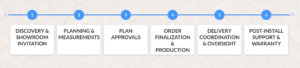
1. Discovery and Showroom Invitation
The process begins with understanding your project, what you need and what you want your windows and doors to accomplish. As Cole Miller, customer experience officer at DWS, explains, “My main objective for the initial intake call is to really figure out the scope of the project.”
That initial conversation also gives DWS an opportunity to understand how you plan to use and enjoy your home. As Krystal Hauseur, founder of DWS, explains, “It all starts with our design elevation session where we learn everything about you, your family, and your vision for how you plan to use and enjoy your new home.”
A visit to the DWS showroom gives you the opportunity to experience different materials and operate the products firsthand, making it easier to understand how each option feels and functions. If visiting the showroom is not practical, DWS can also bring samples to your home. This first stage gives you an opportunity to explore your options before moving into the more technical planning process.
2. Planning and Measurements
Once you decide to move forward, the process becomes much more detailed. DWS reviews each opening and considers how the windows and doors will work within the design of the home. That can include grid placement, flooring transitions, drainage and accessibility requirements. For example, grid placement and sitelines must align with exterior elevations and sightlines, while a flush flooring transition creates a refined finish.
As Miller explains, “This is a very time-consuming process where going through and talking about every opening. Similarly, if the windows and doors have grids or styles, we want to make sure that we’re sitting down in the room and looking at the view, making sure the grid work we’re putting in isn’t going to interfere with it.”
3. Plan Approvals
Before your windows and doors move into production, the details need to be reviewed and approved by the people responsible for different parts of the project. Homeowners review selections such as colors, screen patterns, wood species, stains and glass. Builders and installers review measurements and opening sizes, while architects and other project professionals may also be involved.
This shared review helps ensure the design selections and technical details are aligned before the order moves forward. As Miller explains, “The approval is supposed to be signed off by multiple parties. Specifically, the first one is going to be the homeowner. We want to make sure that we’re going through the approval process with the homeowner to make sure that all the colors are correct, the screen pattern is correct, the wood species is correct.”
The builder or installer also needs to sign off on the sizes, helping confirm that the technical details are ready before production begins.
4. Order Finalization and Production
Once the plans are approved, the order moves into production. Lead times can vary significantly depending on the materials selected, with some products taking as little as 3 to 4 weeks and others taking 22 to 26 weeks or longer.
That timeline matters because a delayed window order can affect the work happening around it. “Our process was developed to truly, number one, meet the timeline for the project,” Miller says. “When windows are not delivered on time in full, you cannot move on to waterproof the home or do any siding.”
DWS continues coordinating the order throughout production to help keep the project timeline on track and reduce avoidable delays.
5. Delivery Coordination and Oversight
Once the manufacturer provides an estimated delivery date, DWS coordinates with the job site to make sure everything is ready for the products to arrive. That includes confirming whether the site is ready, whether there is enough labor to unload the materials and whether special equipment, such as a crane, is needed.
“The other thing with delivery coordination is making sure that the job site’s ready for the material. Have they had delays? Are they still framing? Do they have adequate labor to offload? Do they need special machinery, like a crane, to get the material in position?” Miller explains.
Timing matters here. Installers may already be booked weeks in advance, so DWS works to keep the builder, job site and installer informed if delivery timing changes. Keeping everyone in the loop helps coordinate delivery with the installation schedule.
On delivery day, DWS provides on-site oversight, including product inspection, documentation, and location labeling. This gives the project team a clear record of what was delivered and where it belongs.
6. Post-Installation Support and Warranty
DWS’s involvement continues after the windows and doors are installed. For sizable orders, the team walks through the project with the builder and installer to make sure the units are operating correctly and that all necessary hardware is in place.
“If it is a sizable order, we are going to walk through with the builder and the installer and make sure that everything is operating correctly,” Miller says. “We will operate all units, make sure all hardware is there, and if there’s any needed adjustment or some sort of warranty issue, we’ll submit it to the vendor.”
DWS also documents the order and can help coordinate warranty or service questions that arise after installation.
Remodel or New Build? The Process Can Differ
While the six steps remain consistent, the technical considerations can change depending on whether you are remodeling an existing home or building a new home.
With a new build, windows need to arrive after the framing and roof are ready, while custom wood interiors need protection from weather. A remodel involves existing openings that may need to be reframed or have waterproofing addressed.
As Miller explains, “If it’s a new build and we have windows, we need to make sure that they arrive when the framing is done and there’s a roof. We don’t want there to be rain and destroy the custom wood interiors.”
Because the conditions are different, DWS works with qualified builders and installers to account for the specific requirements of each project.
Ready to Navigate Your Custom Window Process?
Custom windows and doors require more than selecting a product. With the right planning, technical review and coordination, each stage can move forward with greater clarity and fewer surprises.
Designer Window Supply helps you navigate the process from discovery through post-installation support, coordinating the details that matter along the way.
Ready to get started? Schedule a consultation with Designer Window Supply.